
Why Christopher Nolan's "The Odyssey" Is Important - and How It's So Different From Homer
What you won't read elsewhere about how a brilliant film re-imagines an ancient tale

In the next few days, you’ll see and hear a great many stories about how remarkable writer and director Christopher Nolan’s new film “The Odyssey” is. It is that.
But there’s something vital about the film that you will probably not read or hear.
This is likely to be the only report you’ll come across that captures what’s distinctive and significant in the way that it fundamentally reinterprets Homer’s story. Oddly enough, I suspect that Nolan himself hasn’t fully appreciated this.
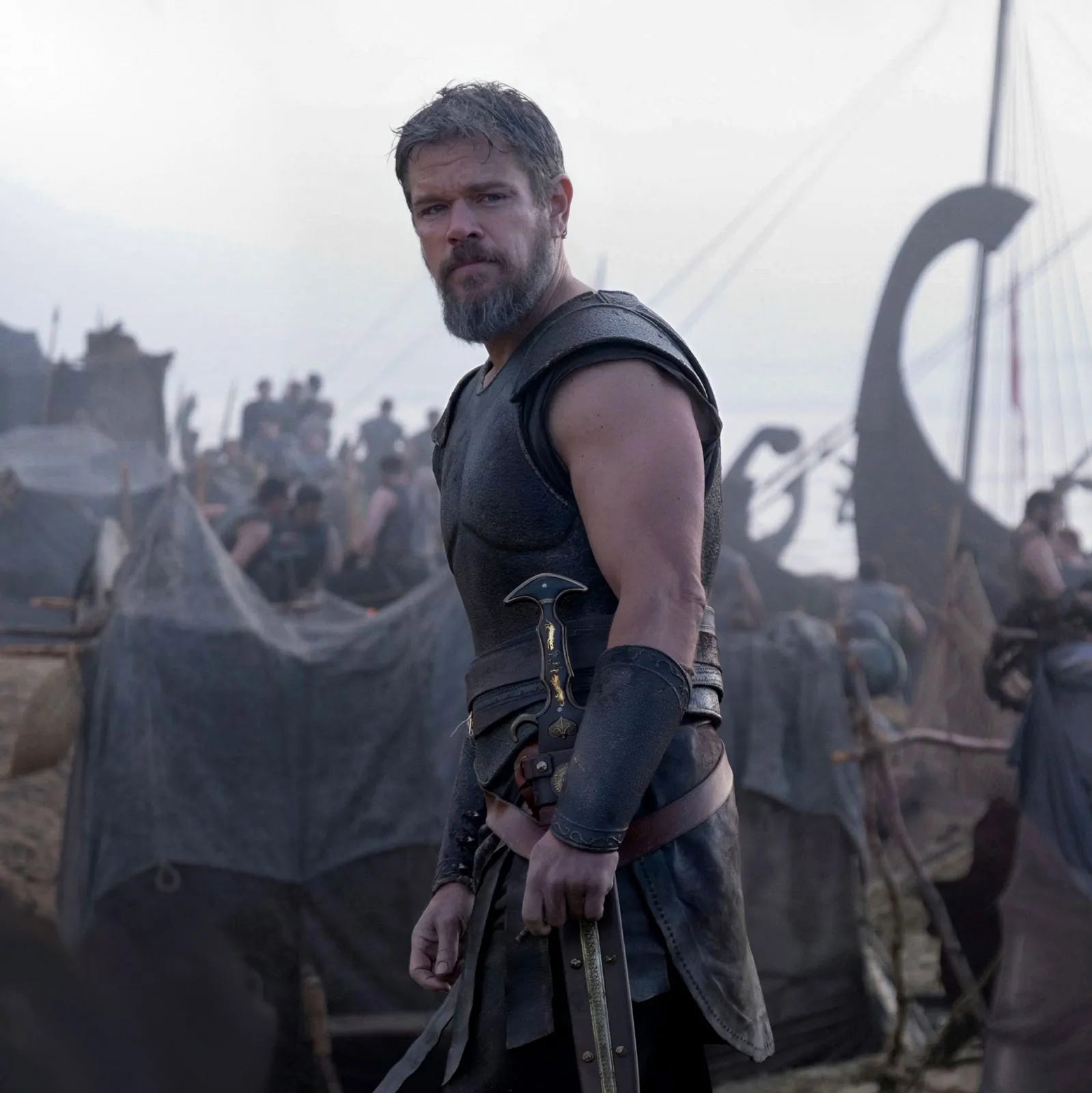
Matt Damon as Odysseus in Christopher Nolan’s powerful and vivid account of the Greek legend.
The sources for the film are various. They extend beyond Homer to the Greek classical poet Hesiod, the Roman epic writer Virgil, and even in a small measure to Christopher Marlowe’s “Doctor Faustus,” which it quotes, and the great poem “Ulysses” by the British poet laureate Alfred, Lord Tennyson. Necessarily then, the film’s story incorporates plot points and ideas that aren’t found in Homer, and there are a number of meaningful deviations from the version you may have encountered in school.
What’s more significant though is how these changes transform the tale’s underlying message. Homer was composing a story that was re-told by what are known as rhapsodes. These were professional entertainers who provided ancient audiences with stories that appealed to their beliefs, attitudes and sensibilities. These rhapsodes were products of a culture that was pagan and founded in a warrior-ethos.
Nolan has revised this story and invested it with an unstated Christian morality. Raised Catholic, Nolan has described himself as a non-believing humanist. Even so, he has absorbed the Christian ethos so thoroughly that he has, perhaps unconsciously, changed the story so that it bears an implicitly Christian belief in the importance of redemption. In tandem with this is a marked alteration in the character of Odysseus (Matt Damon).
The hero presented in Homer is a wily, somewhat roguish figure. His essential focus is nearly always with his own interests. Consider the episode of the poem in which his mariners are turned into swine by the evil goddess Circe (Samantha Morton.) Odysseus does manage to persuade her to make them back into men. Yet, beautiful as she is, he spends a year on her island during which the two engage in idyllic and unconcerned lovemaking. That is of far greater importance to him than returning home to his wife and son. Nolan cuts that part out, and he has cast the plain-looking but talented Morton in the part of the treacherous witch. This provides us with a hero who is not only more sympathetic but more ethical than Homer’s protagonist.
Likewise, Nolan presents Odysseus as a consistently devoted steward of his men, and the director offers us an account of Odysseus’s son Telemachus (Tom Holland) in which he is little more than an earnest and kindly young man. Wholly absent is the concluding episode of Homer’s poem in which Telemachus gleefully murders the women who have served as the consorts to his mother’s suitors.
